
How to Operationalize ERP Data for Sales and Marketing
Most distributors are sitting on valuable ERP data, but because it lives in static reports and disconnected systems, reps miss reorder opportunities, marketing targets the wrong accounts, and margin leaks go unnoticed. ERP systems already capture valuable signals—from order history and product mix to buying frequency and margins—but without operationalizing that data, it rarely turns into sales action.
In this article, we show you how teams can prioritize the right accounts, protect margins, and grow revenue by using the systems they already rely on, such as their ERP, CRM, and marketing automation platforms.
What Does It Mean to Operationalize ERP Data?
ERP systems already contain the facts about your business: who bought what, when, at what price, and at what margin. Operationalizing that data means moving it out of one-off reports and into the daily tools that revenue teams use, such as CRM and marketing automation.
From static reports to actionable insights
For distributors, ERP data usually arrives as emailed PDFs, spreadsheet exports, or month-end dashboards. These reports are helpful for review, but they don’t directly tell a rep what to do next.
Turning reports into actionable insights means pushing the ERP data into CRM in a way that drives specific sales actions. For example, instead of a generic sales-by-customer report, reps see a list of accounts that are overdue for a reorder based on their actual buying patterns, a core advantage of CRM for distributors.
Why most ERP data goes underutilized
Important details like buying activity, margin trends, or at-risk customers often sit behind complex menus, report writers, or exports that only a few power users know how to pull.
On top of that, ERP data is frequently isolated from CRM, e-commerce, and marketing tools, creating silos between the teams that need a shared view of customers and demand. When ERP and CRM aren’t tightly connected, reps and marketers have to jump between systems, re-create lists, or work from stale spreadsheets, so they miss opportunities to act on real buying signals.
How to Operationalize ERP Data in Your CRM
Once you’re clear on which ERP data matters most, the next step is to bring it into the tools sales and marketing use every day, especially your CRM. This depends on three aspects working together:
- Integration
- Structure
- Visibility
Integrating ERP and CRM systems
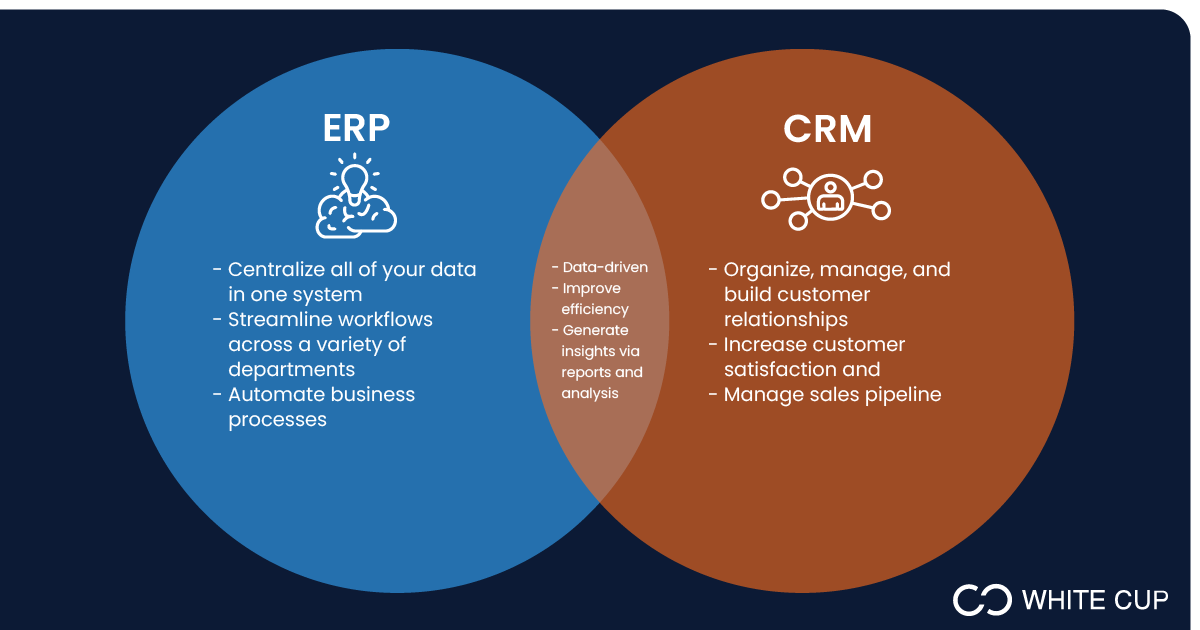
The first step is a clean, reliable integration between your ERP and CRM, so customer, order, product, and pricing data stay in sync. An ERP–CRM connection also avoids the extra customization and maintenance that often come with all-purpose, generic CRMs in distribution. With a purpose-built setup, ERP data flows into CRM automatically, giving revenue teams real-time context without extra logins, spreadsheets, or manual imports.
Structuring ERP data into usable CRM fields
Next, decide which ERP fields matter most for revenue and how they should appear in CRM. Common examples include last order date, products or categories purchased, average order value, margin ranges, and contract status. Roll these into clear fields and summaries, like ‘days since last order,’ ‘top product families,’ or ‘accounts below target margin.’
Making insights visible in sales and marketing workflows
Finally, add these ERP-driven insights to daily workflows. In CRM, that means account pages, opportunity views, dashboards, and task queues that show who is due to reorder, which products to recommend, and where margin needs attention.
For marketing, the same data should power segments and campaigns, so outreach is based on actual buying behavior. For example, you can automatically flag accounts that haven’t reordered within their typical buying cycle, trigger a task for the rep, and launch a targeted campaign promoting the products they usually purchase. When ERP insights are embedded this way, CRM becomes a system that clearly returns value for distributors.
Activating ERP Insights Across Sales and Marketing
Once ERP data is flowing into CRM in a structured way, the value comes from how it powers day-to-day sales and marketing activity. Here are some examples.
Triggering campaigns based on purchase behavior
With ERP data in CRM, marketing teams can trigger campaigns based on real buying behavior. That helps teams reach the right customers at the right time.
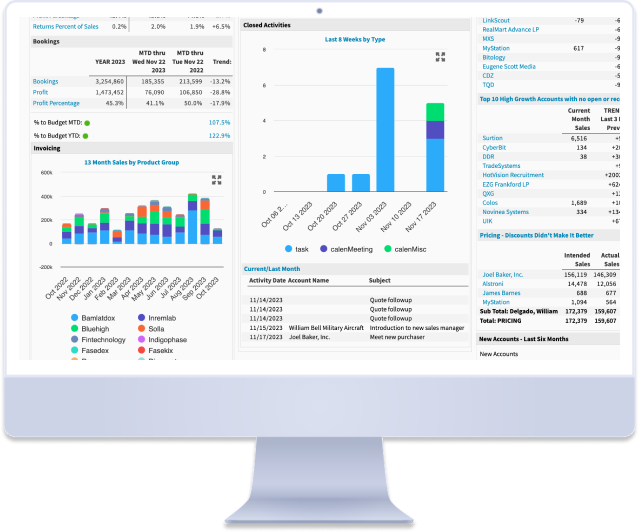
In White Cup, purpose-built AI turns ERP order history into clear sales actions by flagging accounts due for reorder and suggesting relevant cross-sell opportunities—no manual analysis required.
Personalizing outreach using real transaction data
With ERP and CRM connected, reps and marketers can tailor outreach using concrete purchase history data. That means referencing the last order date, top product families, or typical order size, then suggesting related SKUs or higher‑margin alternatives that fit that pattern.
White Cup CRM supports this by pulling ERP orders, e-commerce behavior, notes, and email correspondence into a single, unified customer view. From that screen, users can quickly filter accounts by behavior, build targeted call lists, and drop customers into segmented campaigns that reflect their purchases. And since all of this context sits alongside tasks, activities, and pipeline, reps don’t have to dig through old orders to decide how to personalize their next email or call.
| Watch the video to learn more about White Cup CRM for distributors: |
Aligning sales and marketing around shared insights
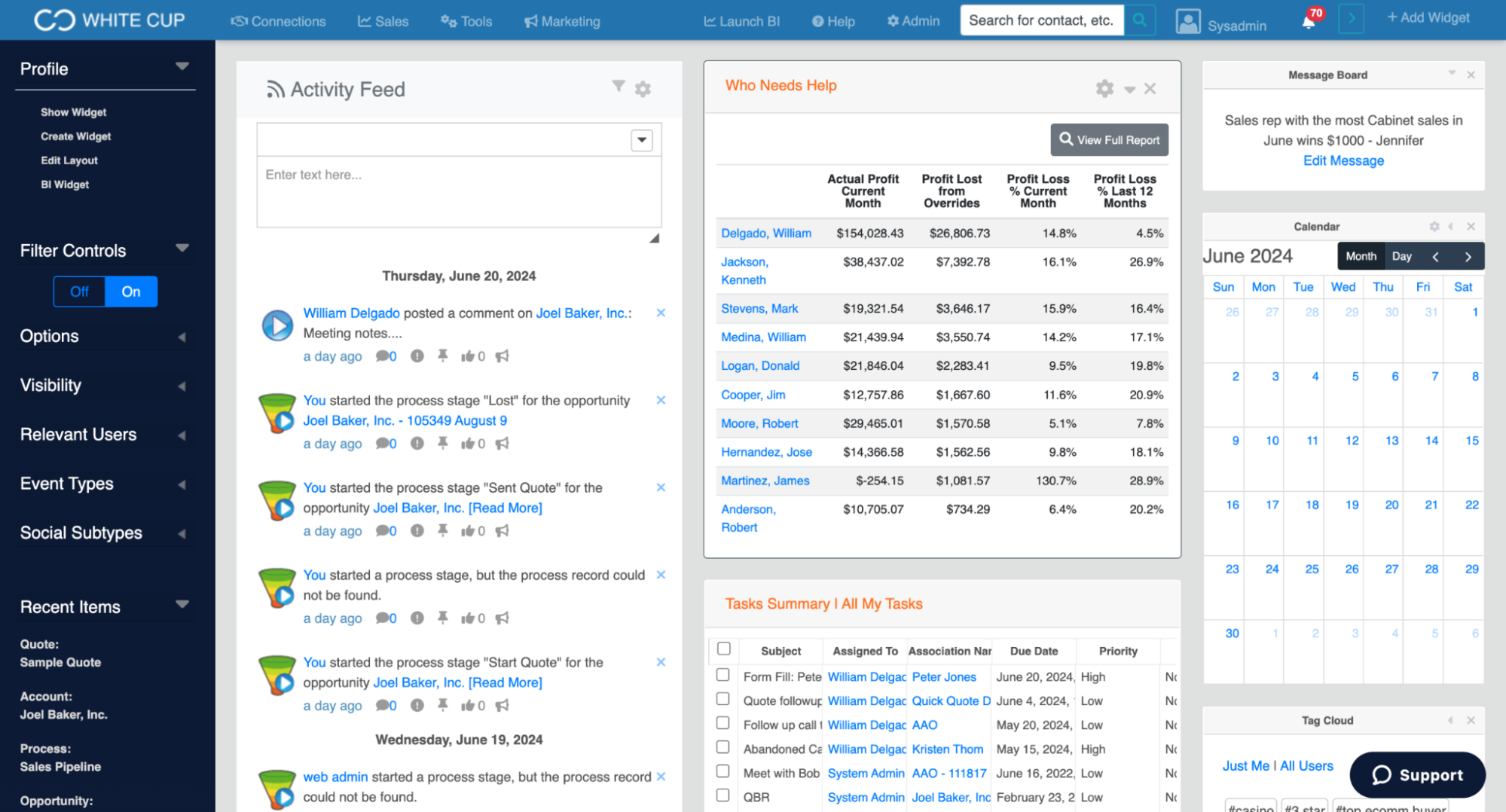
Operationalized ERP data works best when sales and marketing are looking at the same facts. With CRM + BI working from shared ERP data, both teams can see account trends, pipeline, product performance, and margin in one place.
Sales uses these insights to prioritize accounts, protect margin, and coach reps, while marketing uses the same views to design segments and campaigns aimed at growth or recovery in specific customer groups.
Conclusion: Turn ERP Data Into a Revenue Engine
ERP data is already your best source of truth for what customers buy, how often they reorder, and where you earn your margins. When that data is integrated into CRM and BI, it stops being “reporting” and starts driving daily decisions.
White Cup connects ERP, CRM, and BI in a single platform built for distributors, so you can see at‑risk and high‑potential accounts in one view, launch outreach based on real buying behavior, and give every rep clear, data-backed next steps.

Written By
